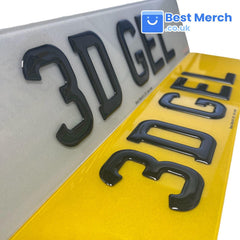

Are 4D Number Plates Being Banned in the UK?
, by Reece Dennis, 4 min reading time
, by Reece Dennis, 4 min reading time
There has been a lot of speculation online about whether 4D number plates are being banned in the UK, with rumours suggesting changes could come as early as 2026. Social media posts, forums, and even some news outlets have caused confusion — leaving many drivers unsure whether their plates are legal or if they’ll soon need replacing.
So what’s actually happening? Are 4D plates illegal? And is a ban really coming?
Let’s break down the facts.
The rumours largely stem from ongoing discussions around number plate readability and ANPR enforcement. Authorities, including the DVLA and police forces, have been increasing efforts to clamp down on illegal or misleading plates — particularly those designed to evade speed cameras or automatic number plate recognition systems.
This has led to misinformation spreading online, with some people wrongly assuming that all 4D number plates are being targeted, rather than just non-compliant ones.
Yes — 4D number plates are legal in the UK, provided they meet current regulations.
A compliant 4D number plate must:
Use the standard DVLA-approved font
Have characters that are clearly readable from all angles
Follow correct spacing, sizing, and layout rules
Be manufactured to the BS AU 145e standard
Avoid reflective or altered character faces
When produced correctly, 4D plates pass MOTs and are road legal.
👉 This is why it’s important to buy properly manufactured, compliant 4D plates, not novelty or modified versions.
The focus is not on banning 4D plates as a style — it’s on illegal modifications, including:
Plates with fonts that distort characters
Reduced spacing to form names or words
Reflective vinyl or overlays on characters
“Ghost” or camera-blocking coatings
Altered colours or finishes that reduce readability
Some illegal plates are made to look like 4D plates, which has unfairly linked the style with enforcement issues.
Possibly — but nothing is set in stone.
There have been discussions about tightening regulations to make enforcement easier, and rumours often point to 2026 as a potential timeframe. However:
No official ban has been announced
No legislation has been passed
Any legal changes would take time, consultation, and public notice
Historically, number plate legislation evolves slowly, and when changes do happen, there is usually a transition period rather than an overnight ban.
If future regulations are introduced, they would almost certainly target:
Non-standard fonts
Excessively thick or distorted characters
Plates designed to interfere with cameras
Properly made, compliant 4D plates are unlikely to be affected — especially those that already meet current DVLA and MOT standards.
This is why choosing a reputable supplier that follows regulations matters.
If you’re concerned about future rule changes, the safest approach is to:
Avoid novelty or “stealth” designs
Stick to standard fonts and spacing
Buy plates made specifically for road use
Keep documentation where required
Compliant plates are designed to remain legal even as enforcement tightens.
Despite the rumours, 4D number plates are not being banned in the UK. The current push from authorities is aimed at illegal, misleading, or camera-interfering plates, not legitimate 4D designs.
While future regulation changes are always possible, nothing has been confirmed — and any changes would take time to implement.
For now, road-legal 4D number plates remain perfectly legal, MOT-friendly, and widely used across the UK.